


The Rio Open is much more than a tennis tournament; it is a commitment to sustainability in its social and environmental dimensions. We strive to balance top-level sport with the positive impact we can generate for communities and the environment.
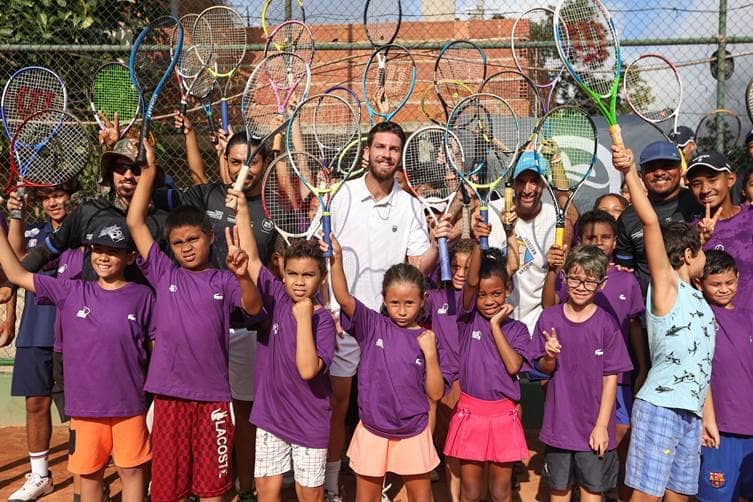
Rio Open Ace is our social pillar. We believe in the power of sport as a tool for inclusion and social transformation. Since the inception of the Rio Open, we have worked to support the personal and professional development of many young people by collaborating with social projects, facilitating participation in tournaments, and promoting professional development opportunities. In this way, we contribute to reducing social inequalities through initiatives that take place continuously—before, during, and after the tournament.
We are firmly committed to diversity. We believe in the richness that comes from bringing together people with different backgrounds, experiences, and preferences. We believe this diversity can foster meaningful change within each member of our team, while also creating an even better working environment for everyone.

Rio Open Green is the environmental pillar of the tournament. Launched in 2020, the program aims to minimize the event’s environmental impact. We operate on two fronts: reducing and offsetting the emissions generated, and implementing efficient and sustainable waste management.
We have adopted a robust climate management policy, voluntarily offsetting carbon emissions across all three scopes, thereby making the Rio Open a carbon-neutral event. In partnership with ENGIE, Brazil’s largest private energy company, these emissions were offset through carbon credits provided by the Jirau Hydroelectric Power Plant. This initiative demonstrates a strong commitment to climate change mitigation.
Waste management has been a priority since the tournament’s planning stage, following circular economy principles that seek to reduce, recycle, and reuse the waste generated, including during the setup and dismantling phases. Our focus is to minimize the negative environmental impact of materials. In addition, we invest in communication with the public to encourage proper waste disposal and reduce contamination. This circular approach permeates all stages—from procurement to disposal—and we foster collaboration to maximize resource efficiency and recycling.
Communication and engagement are essential pillars for the success of our sustainable event. We have established strong partnerships with suppliers who share our vision of environmentally responsible practices, with the aim of reducing impacts and driving alternative solutions. We are committed to educating and inspiring our audience by encouraging active participation and promoting responsible waste-disposal practices. This comprehensive and collaborative approach reinforces our commitment to sustainability, ensuring that all stakeholders are aligned with our mission to deliver a more responsible and environmentally conscious event.
The Rio Open operates sustainably while respecting human rights, supporting the well-being and development of its employees, generating jobs, and promoting healthy practices among participants and suppliers. We adopt strong ethical principles, ensuring transparency throughout our operations.