


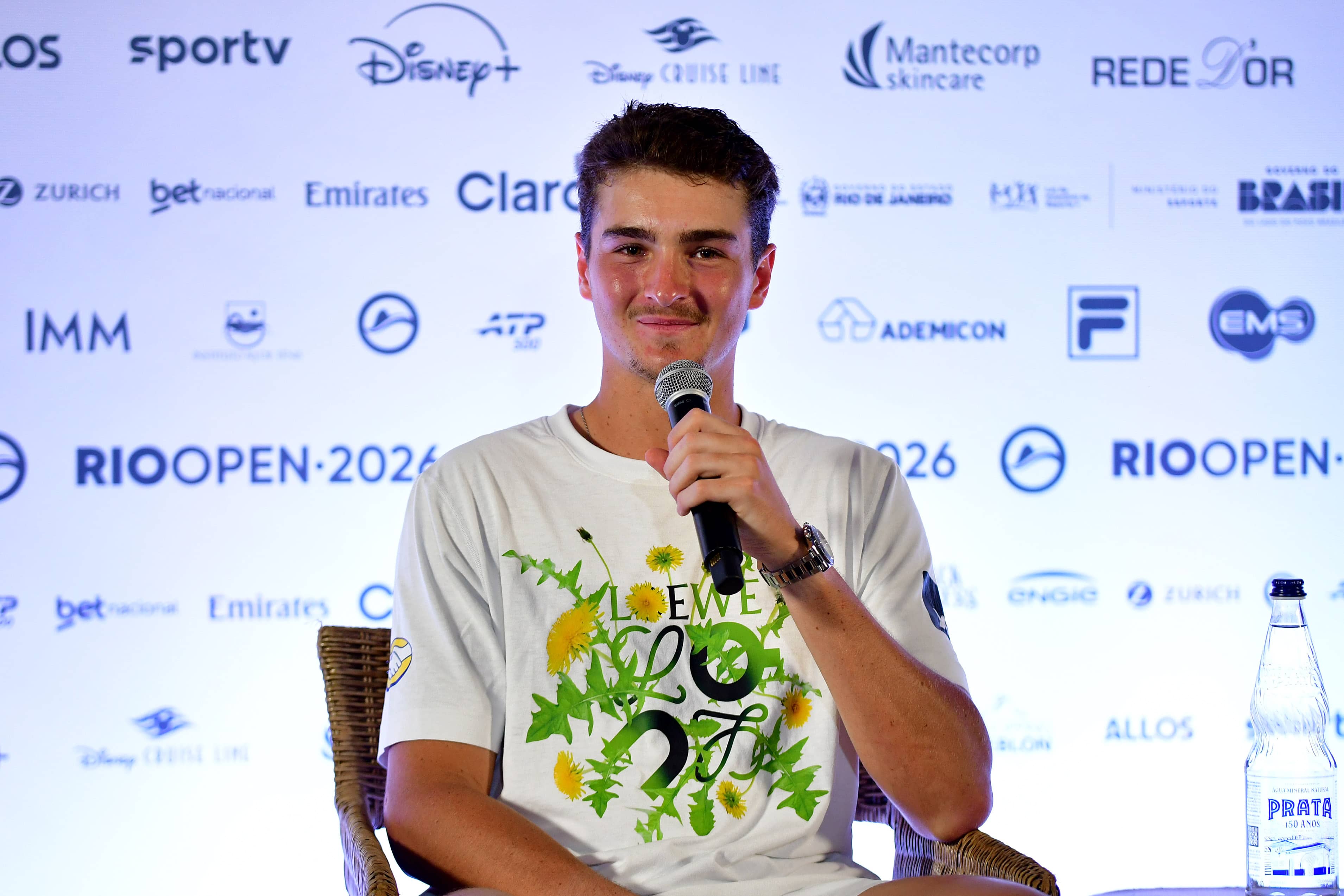
Q: We know that the Rio Open is perfect for you. It was your first ATP tournament. Because of all the affection you have for the tournament, if you could give your opinion on what to improve to make it even more attractive to foreign players, what would it be?
A: I really think the tournament is exceptional. Last year, I played several ATP tournaments and I saw that the Rio Open really has a difference. They treat the players differently, they care. And I've spoken with many players, many would like to visit Brazil, but it's difficult, right? Because the Tour is currently predominantly on hard courts and I think that if, in the future, the tournament has the possibility of changing surfaces, I think it would be very beneficial to the tournament. I think that in general the Rio Open has possibilities in terms of organization, team, people working on how they treat it, to be a big tournament in the future, but I think the change of surface is essential for growth.
Q: Last year you arrived a little diferente after the victory against Rublev and then the victory in Buenos Aires. Can you talk a little about what has changed for you throughout this year and how you are arriving in Rio?
A: Yes, really a lot has changed. Well, I think back then, I was still a developing player. I was always the underdog, I played without pressure, the players didn't yet know what I was capable of, what I could play. I was still a kid there, having good weeks. And I think nowadays I'm not so much a promise, but a bit more of a reality, being around the top 30 or 40 in the world, growing. Most players know me, they know my game. And there's a bit more pressure, more expectation. Obviously, that changes. Last year's scenario was very different. It was my first time playing right after winning the tournament the week before, coming here at my peak. I hadn't really been in Brazil after Australia, so a lot had changed. And back then, I was a little overwhelmed by the pressure, it hit me, I couldn't play the way I wanted to. And I think that, currently, I feel more prepared, more experienced, and understanding how to handle this situation, and I'm confident, I think it's going to be a good week, it's very pleasant to be here, with friends, family, children, many Brazilians, it's very fun, very cool, the training sessions. And we continue, we'll start soon and we'll go all out.
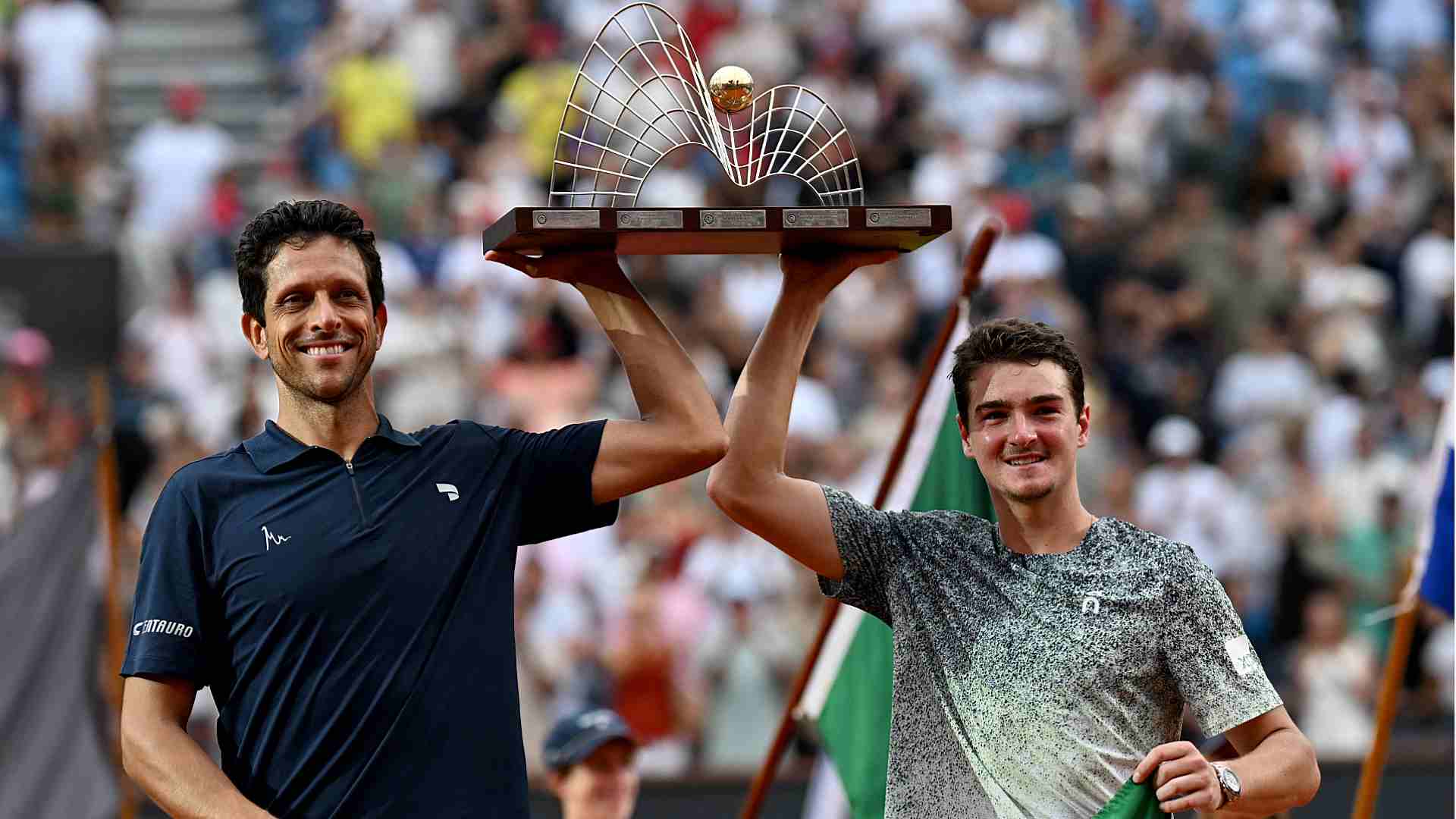
Q: I would like to ask about your partnership with Marcelo Melo, what's the perspective, the feeling of you playing together with him, he's a more experienced player, how do you think you can complement each other and learn together as well?
A: Marcelo is an exceptional guy, a great person, he's always with us at tournaments, we talk a lot, and the opportunity arose. He said he didn't have a partner and right after Buenos Aires I told the team: "Man, it's good to get into rhythm," and I think it's a huge opportunity to be playing a little more, you know, at home. And even more so with someone who's so pleasant to be on the court with, I'd never shared the court with him before. On the other side of the court, we've already hit a few balls, we've already played a tie-break, he challenged me and obviously it didn't work out. But, I'd never shared a court before, playing doubles with him. It was very pleasant today, today we played our first little set, we did well. And it's fun, you know? It's pleasant to be on the court. He's a guy who wants what's best for me and I want what's best for him, we talk a lot, he talks a lot with the coach. And he's an important guy for the sport, he was number one in the world, he's a friend of several players, he's been on the Tour for a long time, so he has a lot of experience to pass on to me, and I have a lot to learn there too.
Q: How is your mindset now for the Rio Open, after losing in Buenos Aires?
A: I was never a player who thought about points, always about work, and with work comes results. I never thought, "Damn, I'm going to focus on points to be smart, so, we can play against this or that player". In my career, things always happened very quickly and obviously there were times when, if I won a tournament, it would completely change the schedule, but currently the schedule remains the same, and, well, I am confident. Obviously, it comes from an injury at the beginning of the year, and I learned a lot, I tried to take as many positive things as possible from that moment. And, rhythm came after I came back, I trained a lot on clay, better physically, better mentally, and prepared to face. I think Buenos Aires was a good battle, it was challenging, not only technically, because the opponent was a superb player, but also mentally. My first week defending a title. So, I come here confident and I know it's going to be a good week. I like playing in these conditions. I've been here in Rio for a long time - hot, humid, heavy ball - and I like playing in these conditions, even more so with the crowd and the support, so it has all the makings of a good week.
Q: How do you manage to bring the confidence into the court? What do you look at, what do you think about, where do you get that boost of confidence to turn games around?
A: Well, I try to think a lot about what I work on every day. There will be moments in your career when you're not feeling good on the court. Your serve won't be good, it won't be working, things won't be going right. And there will be moments when you're getting everything right. I think what I look for a lot during a match when I'm not feeling so confident is to let out a lot of air, breathe, get more intense and things will start happening. Try to put it on autopilot, you know? Because we do this every day and sometimes you don't need to think so much, you're going to shoot there. Just try to put it on autopilot, focus on those legs, and focus on letting out air and putting in maximum intensity, and things will go back to automatic. So, I think that's what I try to do. Sometimes the simple things are the best thing to do, so I think that's how I gradually build confidence.
A: I really think the tournament is exceptional. Last year, I played several ATP tournaments and I saw that the Rio Open really has a difference. They treat the players differently, they care. And I've spoken with many players, many would like to visit Brazil, but it's difficult, right? Because the Tour is currently predominantly on hard courts and I think that if, in the future, the tournament has the possibility of changing surfaces, I think it would be very beneficial to the tournament. I think that in general the Rio Open has possibilities in terms of organization, team, people working on how they treat it, to be a big tournament in the future, but I think the change of surface is essential for growth.
Q: Last year you arrived a little diferente after the victory against Rublev and then the victory in Buenos Aires. Can you talk a little about what has changed for you throughout this year and how you are arriving in Rio?
A: Yes, really a lot has changed. Well, I think back then, I was still a developing player. I was always the underdog, I played without pressure, the players didn't yet know what I was capable of, what I could play. I was still a kid there, having good weeks. And I think nowadays I'm not so much a promise, but a bit more of a reality, being around the top 30 or 40 in the world, growing. Most players know me, they know my game. And there's a bit more pressure, more expectation. Obviously, that changes. Last year's scenario was very different. It was my first time playing right after winning the tournament the week before, coming here at my peak. I hadn't really been in Brazil after Australia, so a lot had changed. And back then, I was a little overwhelmed by the pressure, it hit me, I couldn't play the way I wanted to. And I think that, currently, I feel more prepared, more experienced, and understanding how to handle this situation, and I'm confident, I think it's going to be a good week, it's very pleasant to be here, with friends, family, children, many Brazilians, it's very fun, very cool, the training sessions. And we continue, we'll start soon and we'll go all out.
Q: I would like to ask about your partnership with Marcelo Melo, what's the perspective, the feeling of you playing together with him, he's a more experienced player, how do you think you can complement each other and learn together as well?
A: Marcelo is an exceptional guy, a great person, he's always with us at tournaments, we talk a lot, and the opportunity arose. He said he didn't have a partner and right after Buenos Aires I told the team: "Man, it's good to get into rhythm," and I think it's a huge opportunity to be playing a little more, you know, at home. And even more so with someone who's so pleasant to be on the court with, I'd never shared the court with him before. On the other side of the court, we've already hit a few balls, we've already played a tie-break, he challenged me and obviously it didn't work out. But, I'd never shared a court before, playing doubles with him. It was very pleasant today, today we played our first little set, we did well. And it's fun, you know? It's pleasant to be on the court. He's a guy who wants what's best for me and I want what's best for him, we talk a lot, he talks a lot with the coach. And he's an important guy for the sport, he was number one in the world, he's a friend of several players, he's been on the Tour for a long time, so he has a lot of experience to pass on to me, and I have a lot to learn there too.
Q: How is your mindset now for the Rio Open, after losing in Buenos Aires?
A: I was never a player who thought about points, always about work, and with work comes results. I never thought, "Damn, I'm going to focus on points to be smart, so, we can play against this or that player". In my career, things always happened very quickly and obviously there were times when, if I won a tournament, it would completely change the schedule, but currently the schedule remains the same, and, well, I am confident. Obviously, it comes from an injury at the beginning of the year, and I learned a lot, I tried to take as many positive things as possible from that moment. And, rhythm came after I came back, I trained a lot on clay, better physically, better mentally, and prepared to face. I think Buenos Aires was a good battle, it was challenging, not only technically, because the opponent was a superb player, but also mentally. My first week defending a title. So, I come here confident and I know it's going to be a good week. I like playing in these conditions. I've been here in Rio for a long time - hot, humid, heavy ball - and I like playing in these conditions, even more so with the crowd and the support, so it has all the makings of a good week.
Q: How do you manage to bring the confidence into the court? What do you look at, what do you think about, where do you get that boost of confidence to turn games around?
A: Well, I try to think a lot about what I work on every day. There will be moments in your career when you're not feeling good on the court. Your serve won't be good, it won't be working, things won't be going right. And there will be moments when you're getting everything right. I think what I look for a lot during a match when I'm not feeling so confident is to let out a lot of air, breathe, get more intense and things will start happening. Try to put it on autopilot, you know? Because we do this every day and sometimes you don't need to think so much, you're going to shoot there. Just try to put it on autopilot, focus on those legs, and focus on letting out air and putting in maximum intensity, and things will go back to automatic. So, I think that's what I try to do. Sometimes the simple things are the best thing to do, so I think that's how I gradually build confidence.